REM Web Solutions Judges Wilfrid Laurier’s LCFC Case Competition


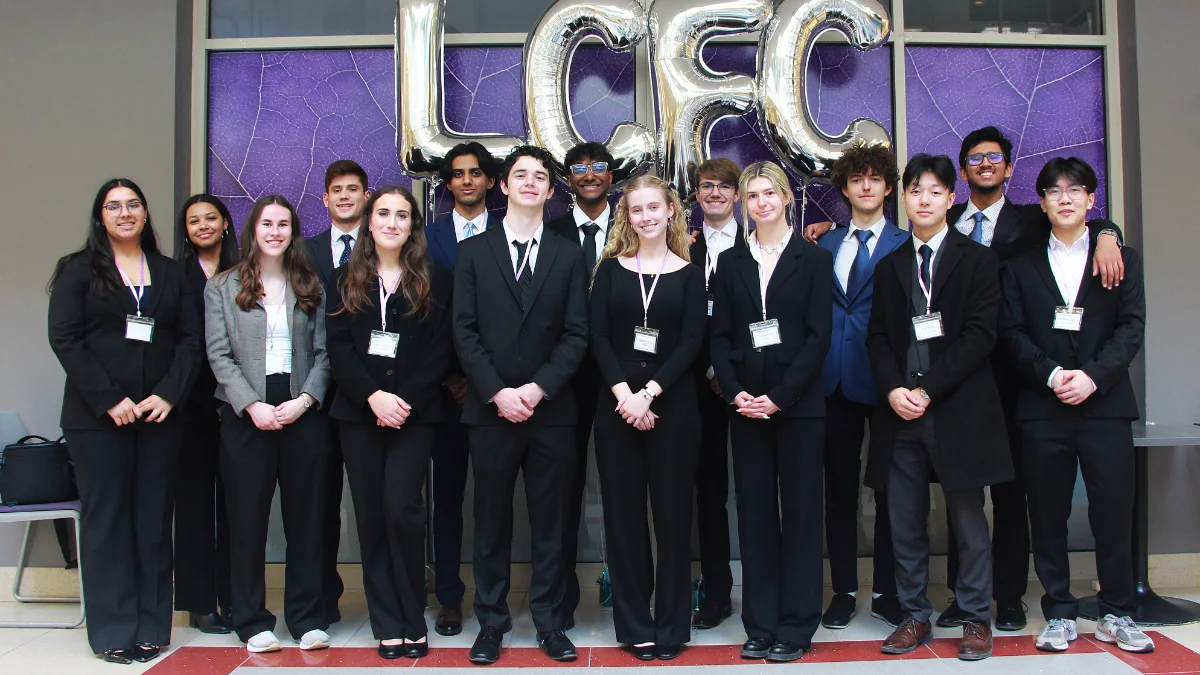
What happens when first and second-year university students are given a real-world challenge instead of a textbook problem and asked to solve it? You quickly see who can think on their feet.
That's exactly what went down at the Laurier Consulting for Change (LCFC) Case Competition, a student-run event hosted on the campus of Wilfrid Laurier University in Waterloo, Ontario. REM Web Solutions had the privilege of being there not as spectators, but as judges, and what we witnessed left a real impression.
What is the LCFC Case Competition?
The Laurier Consulting for Change (LCFC) club is entirely student-run, which already says a lot about the calibre of initiative coming out of Wilfrid Laurier's Lazaridis School of Business and Economics.
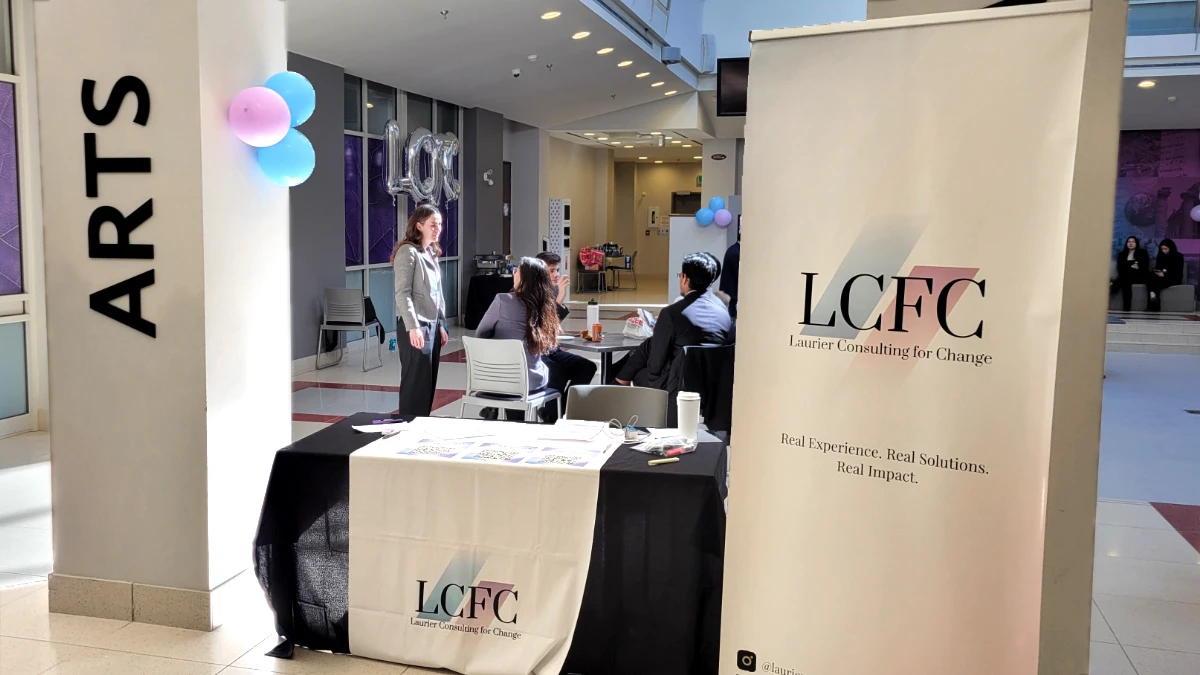
The competition brought together around 15 LCFC members, including first, second, and third-year undergraduate students, mainly from business and marketing programs. They were challenged to solve a real and complex problem for an organization, something many people don’t usually do until much later in their careers.
This wasn't a simulation. There was no fictional company, no fabricated data set. The case was drawn from an actual non-profit in the Waterloo Region facing genuine challenges. Teams had a limited window to analyze the situation, develop a strategy, and present their recommendations to a panel of judges, all under the kind of pressure that mirrors real boardroom conditions.
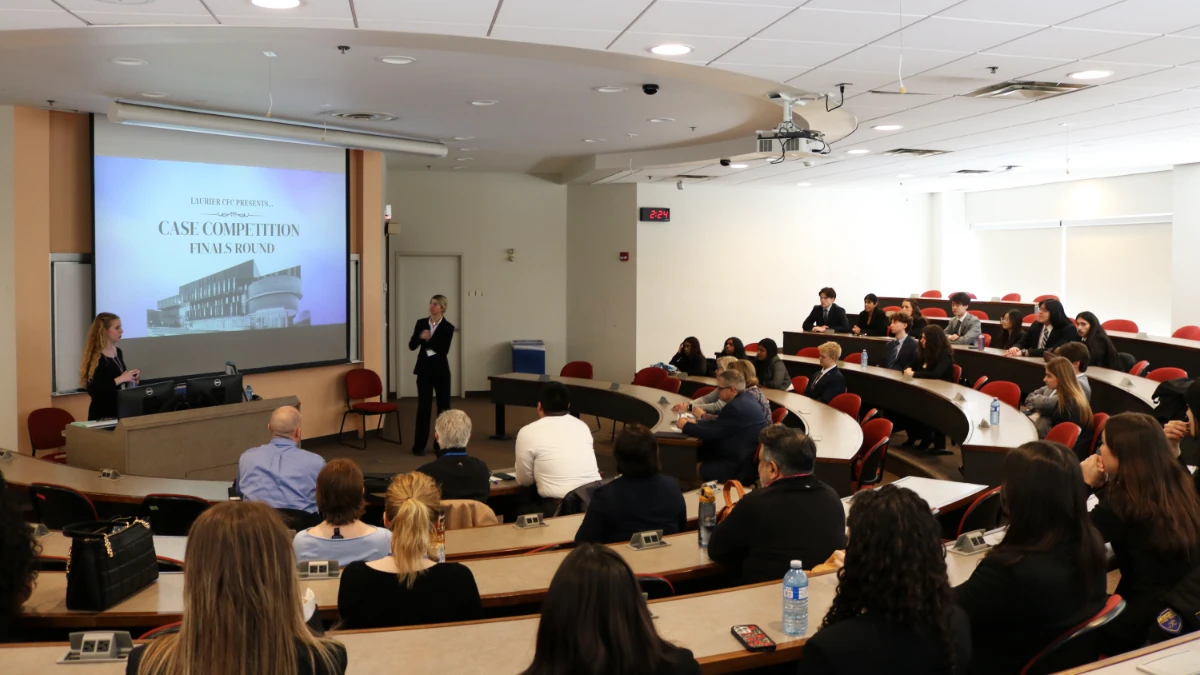
The day was well-structured. Teams went through preliminary panel rounds in the morning, with each team getting 10 minutes to present followed by 5 minutes of Q&A from the judges. After deliberation and lunch, finalists returned for a second round, with winners announced by late afternoon. The LCFC club ran the whole thing smoothly: from the judges' briefing to the final deliberations, the organization was impressive.
A Real Organization, A Real Challenge: Parents for Community Living
This year's case centred on Parents for Community Living (PCL), a not-for-profit charitable organization that has been serving the Waterloo Region since its founding in 1986. PCL provides respite, residential, community participation supports and supported independent living services at thirteen locations throughout the Waterloo Region, supporting over 120 children, youth, and adults with developmental disabilities.

Their mission is straightforward but profound: to create inclusive and supportive environments where individuals with intellectual and developmental disabilities can thrive by promoting independence, dignity, and a strong sense of belonging within the community.
So, what was the challenge?
The increasing pressure on organizations like PCL from every direction.
Ontario's developmental services sector is in a state of serious strain. Over 52,000 adults with developmental disabilities in Ontario are still waiting for the support they deserve (some for more than a decade). In Waterloo Region alone, there are 526 adults in need of residential services, 573 adults waiting for employment and day support, 268 adults in need of respite services, and over 765 children waiting for respite services.
Meanwhile, the majority of PCL's funding flows through the Ontario Ministry of Children, Community, and Social Services, a single source that leaves the organization vulnerable to policy shifts and budget constraints.
The main problem students were asked to solve was how PCL can continue delivering high-quality, person-centred support while demand is growing faster than available resources and funding?
It's not a simple question. And it's not one with a clean, tidy answer. That's precisely what made it such a valuable case.
REM Web Solutions’ Role as Judges
Rob Matlow and Sanj Rajput attended as judges on behalf of REM Web Solutions, and they approached it the same way they'd evaluate a strategy pitch in any business context.
In Sanj’s words, “We weren’t there just to be impressed by polished slides or confident delivery. We were looking for real strategic thinking.”
The judging rubric covered five core dimensions: problem understanding, feasibility for PCL, financial sustainability, mission alignment, and implementation clarity. Those criteria aren't arbitrary. They're the same filters any experienced operator applies when evaluating whether an idea actually has legs.
What stood out most to our judges wasn’t any single presentation, but the experience itself. These were first, second, and third-year students; many were still taking introductory business courses. Yet they stood in front of a panel of industry professionals, confidently explaining and defending their ideas during a live Q&A. That kind of real-world experience is hard to recreate in a classroom, no matter where they are placed in the competition.
What Did the Students Propose?
Teams approached the problem from different angles. Some focused on expanding PCL’s fundraising efforts and building stronger community partnerships. Others explored operational improvements, such as changes to housing models and better use of existing programs. A few also looked at advocacy and policy alignment, aiming for long-term, system-level change rather than just internal fixes.
The ideas ranged from smaller changes, like improving marketing and expanding the volunteer network, to more ambitious plans, such as new housing developments. Interestingly, some straightforward ways to increase revenue, like creating a structured fee-for-service model to generate income beyond government funding, were not fully explored by the students. That in itself is a valuable lesson. Sometimes the most obvious solution is the one that gets overlooked.
What mattered most wasn’t just the ideas, but the thinking behind them. Could the students clearly explain why their recommendation should be the priority? Could they support it with solid financial reasoning? Did they understand the rules and environment PCL operates in? These were the factors that set the top teams apart from the rest.
What the Strongest Team Did Differently?
After a full day of presentations, it became clear what separates a strong strategy from an average one.
The top team kept things focused. Instead of trying to do everything, they chose one main idea and built everything around it. This made their plans feel realistic and doable, not just full of ideas.
They also understood the limits. PCL doesn’t have unlimited time or money. It works within strict rules and funding systems. The teams that accepted these challenges and built practical solutions around them stood out right away. When students could explain what the first 90 days would actually look like, it showed real thinking and effort.
Most importantly, they kept people at the centre. The best team never forgot that PCL supports real individuals. It’s easy to focus only on numbers or operations, but the strongest ideas always came back to improving people’s lives and helping them live with dignity. That’s what connected most with the judges.
On the other hand, some common mistakes were clear. Some teams tried to do too much without clear priorities. Others made financial assumptions that didn’t feel realistic. And some ended their plans with “PCL should explore…” without clearly deciding what to do next.
Why This Kind of Experience Matters?
From a business point of view, what we saw at the LCFC competition is exactly the kind of experience that makes students truly job-ready, not just degree-ready.
Skills like strategic thinking, working under pressure, teamwork, and solving real problems within limits are not things you learn just by reading. You learn them by doing them. Case competitions like this give students a rare chance to practice all of these skills before they enter the workforce.
There’s also real value for organizations like PCL. A full day of presentations from motivated students is like receiving free strategy ideas. PCL gains fresh perspectives, new ideas, and different approaches that they might not have considered before. For a non-profit working with limited resources, this kind of input can be incredibly valuable.
What We Took Away
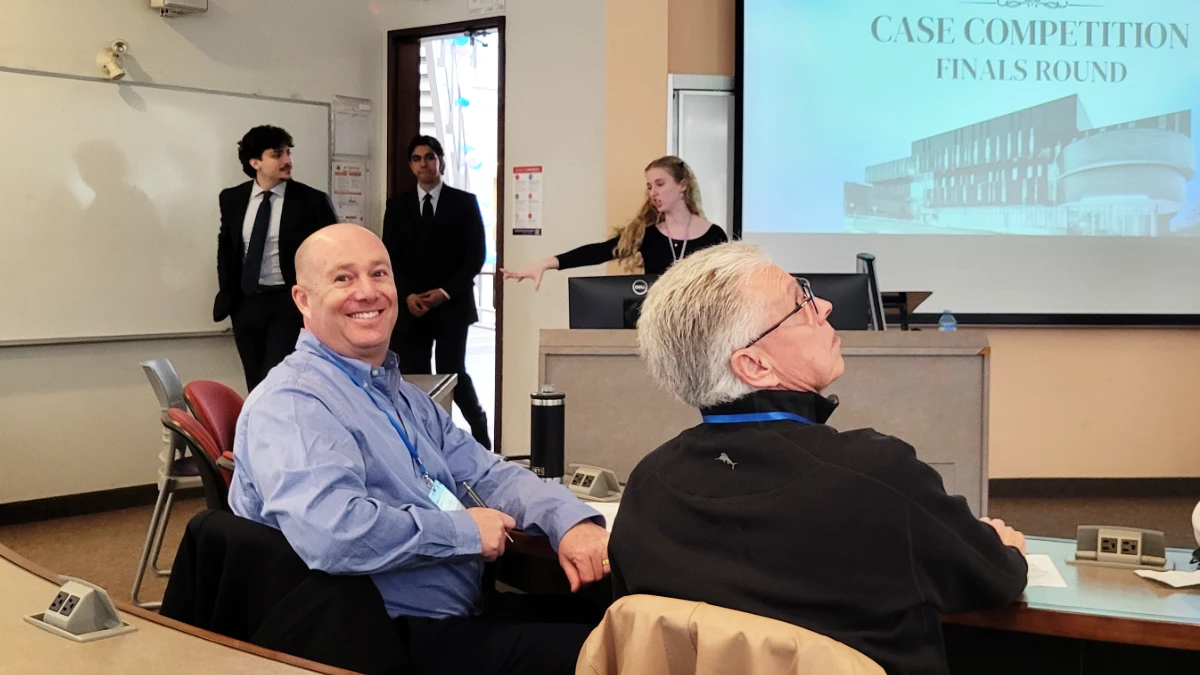
One of the best parts of the day wasn’t just the presentations, but how well the entire event was organized. The LCFC club did a great job. The volunteers kept everything on track, and the energy in the room showed how much the students cared about doing well. That level of effort and initiative is exactly what you want to see from a student-led group.
At REM, we believe in supporting the communities we’re part of. That includes investing time in events that help shape the next generation of business talent. Being part of the LCFC competition was a strong reminder that talent doesn’t just appear; it’s built through experiences like this.
If you’re an employer in the Waterloo Region, it’s worth paying attention to students from programs like this. They’ve already experienced real-world pressure and know how to handle it. That matters.
REM Web Solutions is a full-service digital agency based in Kitchener, Ontario. We help businesses grow through smart strategy, web development, and digital marketing. If you’re looking for a team that brings practical, real-world thinking to every project, we’d love to connect.